What Is Voltage Drop? Causes, Formula, and a Practical Example
What Is Voltage Drop?
Voltage drop is the reduction in electrical potential as current flows through a wire, connector, or other resistive part of a circuit. Since real conductors have resistance, the voltage available at a load is usually lower than the voltage at the source.
A small voltage drop is normal. If it becomes excessive, however, equipment may operate unreliably, lose performance, or fail to start.
Common Causes of Voltage Drop
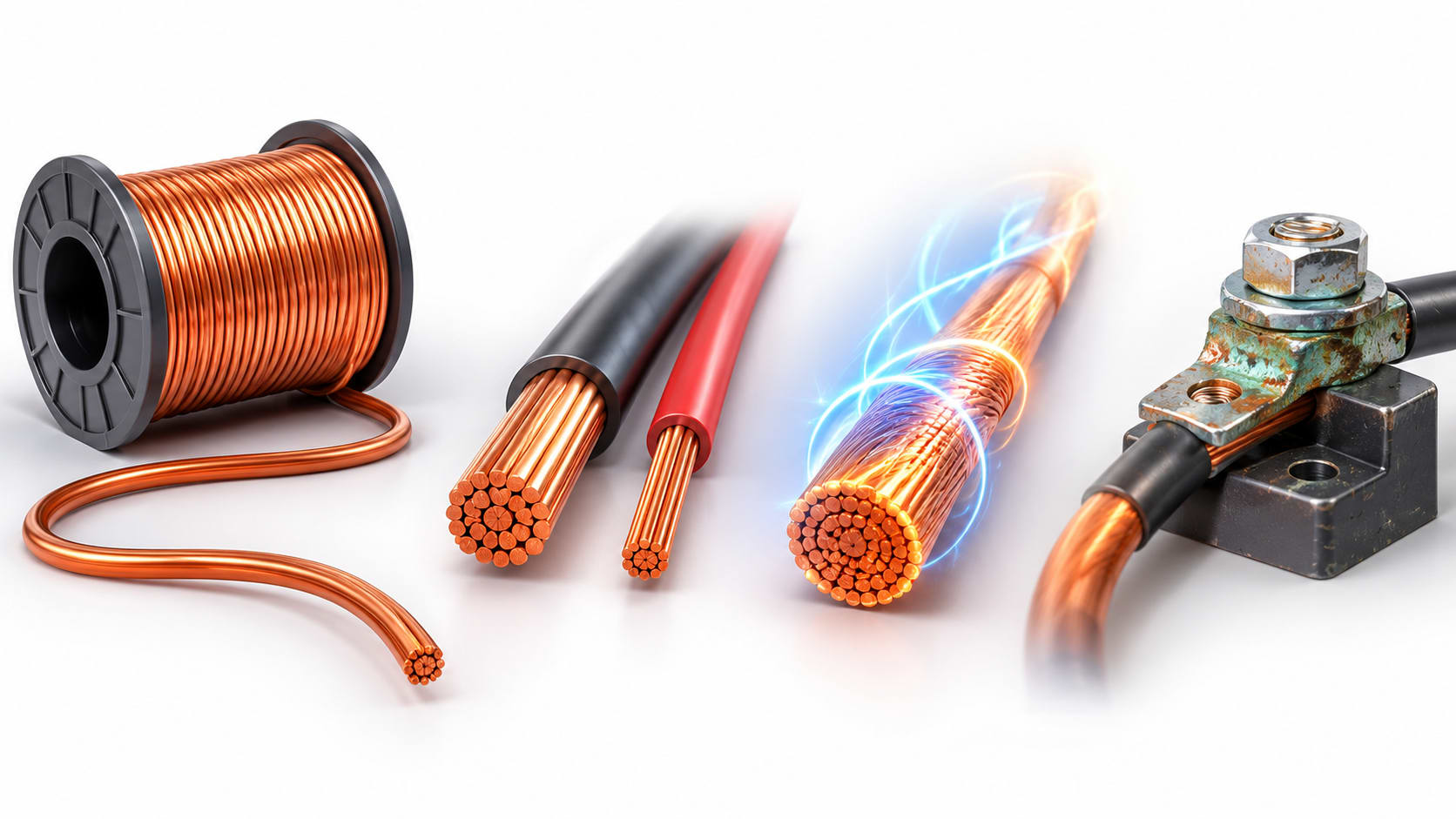
Several factors can increase voltage drop:
- Long conductors: a longer wire generally has greater resistance.
- Small conductor cross-section: a smaller cross-section usually means higher resistance.
- High current: for a given resistance, a higher current produces a larger voltage drop.
- Material and temperature: conductor resistivity and operating temperature affect resistance.
- Poor connections: loose, oxidized, or damaged terminals can add unwanted resistance.
Basic Voltage Drop Formula
For a DC circuit or a purely resistive circuit, the basic formula is:
ΔV = I × R
Where:
- ΔV is the voltage drop, measured in volts (V).
- I is the current, measured in amperes (A).
- R is the total resistance of the section being considered, measured in ohms (Ω).
The percentage voltage drop is:
Voltage drop (%) = (ΔV / Source voltage) × 100
This is a basic formula for DC or purely resistive circuits. AC calculations may also need to account for impedance, power factor, and the system configuration.
Worked Example

Assume a DC circuit has a 12 V source, a load current of 5 A, and a total resistance of 0.2 Ω for both the outgoing and return conductors.
- Voltage drop: ΔV = 5 × 0.2 = 1 V.
- Voltage at the load: 12 − 1 = 11 V.
- Percentage drop: (1 / 12) × 100 ≈ 8.33%.
The device therefore receives approximately 11 V rather than the source voltage of 12 V.
How to Reduce Voltage Drop
Use conductors with an appropriate cross-section for the current and cable length, keep cable runs as short as practical, choose suitable conductor materials, and inspect terminals for looseness or corrosion. Do not modify an electrical installation without first checking the load and installation conditions.